


ELIESER JAIRO · GUIDE
The eye behind
the color.
What does a film colorist do? Discover how color correction and color grading help tell your film’s story.
By Elieser Jairo · Film colorist
A film colorist shapes the color and visual consistency of films, series and commercials. The work combines technical and creative decisions: matching shots, interpreting the director’s and cinematographer’s references, and developing a look that supports the story.
The role goes beyond applying a filter or a LUT. Two images may need different adjustments to feel like part of the same scene. The aim is a coherent image that reflects the project’s creative intent and agreed delivery requirements.
What does a colorist do in film?
Before grading begins, the colorist discusses references, visual language, scope and the film’s intended release. During the grade, they assess exposure, contrast, color balance and continuity between shots. Selective adjustments can guide attention, balance skin tones and backgrounds, or support the atmosphere of a sequence.
These choices are made in dialogue with the director and cinematographer. A night scene, for example, does not simply need to look darker. Contrast, separation and color can help communicate what the story needs.
Color correction vs. color grading: what is the difference?
Color correction usually refers to the technical balance of an image and consistency between shots. This may involve exposure, contrast, white balance and visible differences between takes.
Color grading usually emphasizes the creative look: palette, atmosphere, contrast and the relationship between scenes. In practice, the terms overlap, and both approaches may be part of the same job. References and the expected result should therefore be clear in the brief.
How does colorimetry fit into the workflow?
Colorimetry concerns the description and measurement of color. In film and video, it helps us understand how an image is represented and viewed. Image treatment involves more than personal taste: it also requires attention to the source material, viewing chain and delivery destination.
An uncalibrated screen may show the image differently from the studio monitor. A review file is still useful for discussing intent and requesting changes. It does not automatically make every phone or computer a reliable color reference.
Why use DaVinci Resolve?
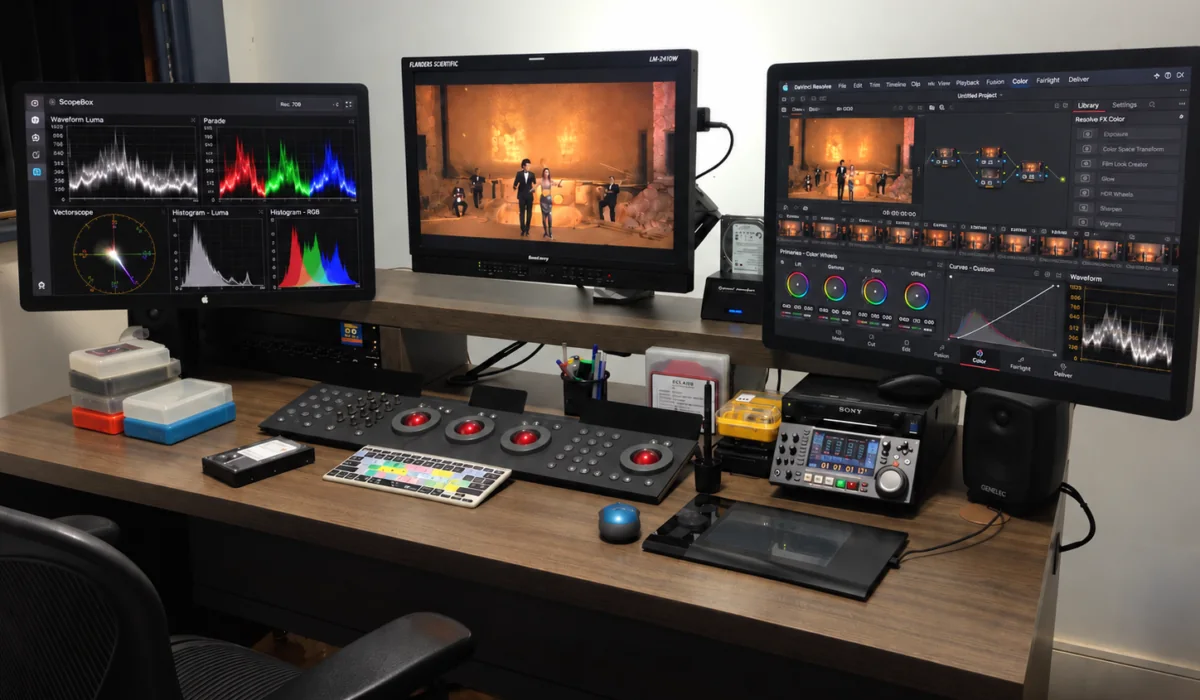
DaVinci Resolve is the tool I use for color correction and grading. It is part of a workflow that also includes calibrated monitors, color controls and image evaluation tools. The software alone does not define the result. Interpreting references and making grading decisions are part of the colorist’s work.
This page explains a post-production service. It is not a DaVinci Resolve course, and editing is not automatically included in a quote.
When should you bring a colorist into the project?
It is useful to talk before sending the final materials. This helps align the scope and avoid transfers or deliveries that do not fit the agreed workflow. Share the edit’s current stage, running time, required versions and intended release. The necessary files are defined for each production.
Can color grading be done remotely?
Yes. In my remote workflow, we align references and arrange the material transfer. Review takes place through a link, with comments by message or email. Once approved, the final render is delivered in the agreed format. My studio is based in Rio de Janeiro.
See how remote color grading works.
Are color grading and DCP the same thing?
No. Color grading treats the image. A DCP is the file package prepared for digital cinema screening. If your film is going to a cinema or festival, both stages can be quoted together, taking the screening specifications into account.
Explore DCP creation and mastering for cinema.
How do you choose a film colorist?
Look at completed work and discuss the intention behind your production. Alongside the portfolio’s visual style, agree on the review process, final versions, responsibilities and schedule. The quote should clearly state what is included.
I have worked with production companies, agencies and filmmakers since 2011. Browse my filmography and learn about my color correction and grading service.